Miami Marlins Overview
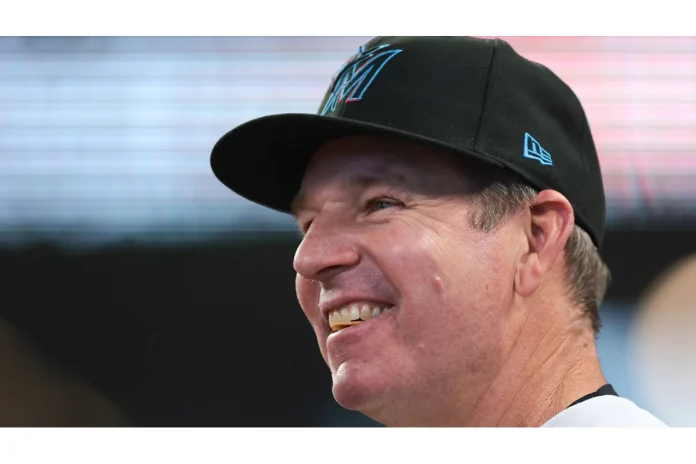
The Miami Marlins are a professional baseball team based in Miami, Florida, competing in Major League Baseball as a member of the National League East Division. Founded in 1993 as the Florida Marlins, the team has captured two World Series championships in 1997 and 2003, achieving each title as a wild card entrant without ever securing a division championship. The Marlins play their home games at LoanDepot Park, a ballpark built exclusively for baseball that opened in 2012. The franchise is owned by Bruce Sherman, with Caroline O’Connor serving as president of business operations, and is currently managed by Clayton McCullough.
Despite posting one of the lowest winning percentages among active Major League Baseball franchises, the Marlins have built a legacy defined by improbable postseason success and memorable championship runs. The team rebranded from the Florida Marlins to the Miami Marlins in 2012 as part of its move to a purpose-built downtown stadium, adopting new team colors and a refreshed identity. The Marlins are one of only two Major League Baseball franchises, along with the Colorado Rockies, to have never won a division title, yet remain the only franchise to have won the World Series in each of its first two winning seasons. The organization is widely recognized for its scrappy underdog reputation, willingness to rebuild aggressively, and capacity to peak at precisely the right moment in the postseason.
Founding and Organizational Origins
Wayne Huizenga, chief executive officer of Blockbuster Entertainment Corporation, was awarded an expansion franchise in the National League for a ninety-five million dollar expansion fee, and the team began operations in 1993 as the Florida Marlins. Major League Baseball had announced its intention to add two new teams to the National League a few months earlier, and placing one of them in Florida was a foregone conclusion. Competing groups from Orlando and Tampa Bay mounted serious bids, but on June 10, 1991, the National League officially awarded the Miami-based franchise to Huizenga. The organization adopted the name Marlins from previous minor league teams that had carried the same moniker in Miami dating back to 1956.
Rene Lachemann, a former catcher who had previously managed the Seattle Mariners and Milwaukee Brewers, was hired as the first manager in club history. The Marlins built their initial roster through the 1992 Major League Baseball Expansion Draft, selecting players from across the league to form their inaugural lineup. The franchise began play at Joe Robbie Stadium, a football-oriented venue in Miami Gardens that they shared with the Miami Dolphins of the National Football League. Donald A. Smiley was named the second president in club history following the 1993 season, and the early front office laid the groundwork for the organization’s competitive philosophy while operating out of temporary facilities at their shared stadium.
Growth Into National League Competition
The Marlins’ entry into National League competition began with a win on April 5, 1993, when Charlie Hough started on the mound in a victory over the Los Angeles Dodgers. Jeff Conine, who would earn the enduring nickname Mr. Marlin, went four-for-four in that debut game and hit the first home run in franchise history during spring training, immediately establishing himself as a fan favorite. Gary Sheffield and Bryan Harvey represented the club as its first Major League Baseball All-Star Game selections, and Sheffield homered in the Marlins’ first All-Star at-bat, signaling the organization’s ability to produce star-caliber talent from the outset.
In that opening season, the Marlins finished five games ahead of the last-place New York Mets and drew 3,064,847 fans to the ballpark, a strong attendance figure for an expansion franchise. The team made an immediate high-profile trade by sending young setup reliever Trevor Hoffman and two minor league prospects to the San Diego Padres for third baseman Gary Sheffield, a deal that paid dividends on the field that season even though Hoffman later became one of the greatest closers in National League history. By the end of the 1996 season, after Lachemann was replaced midway through the year by John Boles, the Marlins had posted an 80–82 record and were preparing to take a significant step forward with the hiring of Jim Leyland as manager.
Miami Marlins Competitive Journey
The Miami Marlins have competed in Major League Baseball as an expansion franchise since 1993, experiencing a rollercoaster of near-misses, rebuilding efforts, and dramatic championship runs that have defined one of the most unpredictable narratives in professional sports. Despite ranking among the lowest-attended and lowest-performing franchises by win percentage over a full season, the team has repeatedly demonstrated an ability to peak at the right time, reaching the postseason four times and winning the World Series twice. From the original Florida Marlins teams of the 1990s and 2000s to the modern Miami Marlins era following their 2012 rebrand and stadium move, the franchise has remained a compelling case study in how a small-market organization can punch above its weight.
Early Seasons and Development (1993–1996)
The Marlins’ first four seasons were marked by foundational struggles, roster construction, and the search for a sustainable competitive identity. The 1993 expansion season produced a respectable debut with a winning record well above the last-place Mets, and Conine, Sheffield, and Harvey gave the franchise immediate star power. The strike-shortened 1994 season saw the team finish in last place in the division with a 51–64 record, and a fourth-place finish followed in 1995 at 67–76, reflecting the growing pains typical of an expansion club still assembling its core.
By 1996, the Marlins had posted an 80–82 record, signaling that the organization was closing the gap with established National League East rivals. Lachemann was replaced as manager midway through the 1996 season by John Boles, who oversaw the development of a young core featuring players like second baseman Luis Castillo and shortstop Édgar Rentería. This foundation set the stage for the breakthrough that would arrive the following season, as the front office prepared to make the kind of bold veteran additions that would transform the team into a championship contender in a single offseason.
Breakthrough in Major League Baseball — 1997
Former Pittsburgh Pirates manager Jim Leyland was hired following the 1996 season, and his arrival marked the beginning of one of the most remarkable championship runs in Major League Baseball history. Despite finishing nine games behind the division champion Atlanta Braves in 1997, the Marlins earned a wild card berth and added veteran experience at the trade deadline with the acquisitions of left fielder Moisés Alou, third baseman Bobby Bonilla, catcher Darren Daulton, and outfielder Jim Eisenreich. Young stars Castillo and Rentería formed one of the best double-play combinations in the National League, giving the team a rare blend of youthful energy and postseason-tested leadership.
The Marlins swept the San Francisco Giants three games to zero in the National League Division Series and defeated the Atlanta Braves four games to two in the National League Championship Series, overcoming the loss of Alex Fernandez to a torn rotator cuff and Kevin Brown to a virus. Rookie pitcher Liván Hernández struck out fifteen Braves and outdueled Greg Maddux in a two-to-one Game 5 victory that became one of the most celebrated pitching performances in franchise history. In the World Series against the Cleveland Indians, the Marlins prevailed in seven games when Édgar Rentería delivered a soft liner in the bottom of the eleventh inning of Game 7 that glanced off Cleveland pitcher Charles Nagy and into center field to score the winning run, delivering Miami its first world championship.
Breakthrough in Major League Baseball — 2003
The Marlins captured their second World Series title in 2003 under manager Jack McKeon, mounting one of the most dramatic comeback runs in postseason history. High-kicking left-handed pitcher Dontrelle Willis, called up from Double-A in May, posted an eleven-to-two record in his first seventeen starts and carried an injury-depleted Marlins roster through the second half of the season. Miguel Cabrera, also promoted from the minors, hit a walk-off home run in his first major league game against the Tampa Bay Devil Rays, and both players became essential contributors to the club’s playoff push. Jeff Conine returned from Baltimore, Hall of Fame catcher Iván Rodríguez signed as a free agent, and closer Ugueth Urbina arrived from the Texas Rangers to round out a roster that finished ten games behind the Braves but captured the National League wild card.
In the National League Championship Series, the Marlins faced the Chicago Cubs and fell behind three games to one before completing one of the most stunning comebacks in baseball history. Game 6 at Wrigley Field produced the infamous Steve Bartman incident, in which a fan reached for a foul pop-up hit by Luis Castillo in the eighth inning, preventing left fielder Moisés Alou from making the catch and triggering an eight-run Marlins rally that turned a deficit into a victory. The Marlins won Game 7 on the road, capturing their second National League pennant, and went on to defeat the heavily favored New York Yankees in six games in the World Series. Josh Beckett was named the Most Valuable Player after throwing a five-hit complete-game shutout in the clincher at Yankee Stadium, and McKeon became the oldest manager ever to win a World Series title at age 72.
Modern Program and Current Direction (2012–Present)
The Marlins entered a new era in 2012 with the opening of LoanDepot Park in downtown Miami, and as a condition of the stadium agreement with Miami-Dade County, the franchise changed its name from the Florida Marlins to the Miami Marlins and adopted new logos and team colors. Bruce Sherman became the principal owner of the franchise and oversaw an organizational rebuild focused on developing homegrown talent through the club’s minor league system of seven affiliates. In 2017, Giancarlo Stanton won the National League Most Valuable Player Award, becoming the first Marlin to earn that honor in the modern era.
On November 13, 2020, the Marlins made history by naming Kim Ng as general manager, becoming the first club in any American major-level sports league to hire a woman to an executive position and making Ng the first Asian American general manager in Major League Baseball history. Under Ng’s leadership, the Marlins reached the postseason in 2020 by sweeping the Chicago Cubs in the Wild Card Series before falling to the Atlanta Braves in the National League Division Series, and they clinched their fourth postseason berth on September 30, 2023, making Ng the first woman general manager in Major League Baseball history to lead a playoff team. On February 28, 2022, Derek Jeter stepped down as chief executive officer, and on January 8, 2026, the team announced the termination of its contract with FanDuel Sports Network following a missed rights payment, with broadcast arrangements for the 2026 season expected to shift to local television or MLB Network platforms.
Philosophy and Competitive Strengths
The Miami Marlins have cultivated a reputation as one of the most resourceful and opportunistic franchises in Major League Baseball, built on the philosophy of developing young pitching, acquiring undervalued veteran talent at the trade deadline, and peaking at precisely the right moment for playoff runs. The organization’s history of winning World Series titles while finishing well behind division leaders reflects a willingness to prioritize October performance over regular season dominance, an approach that has produced two championships but also some of the longest stretches between winning seasons in the sport. The team’s competitive strengths have traditionally centered on dominant starting pitching during championship runs and the ability to construct balanced rosters through savvy trades and player development rather than high payroll spending.
Key Milestones and Major Moments
The Marlins’ first World Series championship in 1997 remains one of the quickest climbs to a title in Major League Baseball history, accomplished in just the franchise’s fifth season. The 2003 comeback against the Chicago Cubs, highlighted by the Steve Bartman incident and a four-game-to-three National League Championship Series victory after trailing three games to one, ranks among the most dramatic postseason runs ever recorded. Jeff Conine is the only player to appear in both World Series championship teams, embodying the franchise’s identity across its entire first decade. The 2023 postseason berth marked a significant organizational milestone as Kim Ng became the first woman general manager in Major League Baseball history to lead a playoff team, and the franchise’s 2025 announcement of a Legends Hall of Fame honored the enduring contributions of players like Conine to the organization and South Florida community.
Miami Marlins Achievements and Results
The Miami Marlins have established themselves as one of the most accomplished underdog franchises in Major League Baseball history despite having one of the smallest records of regular season dominance among active teams. The organization’s two World Series championships in 1997 and 2003 represent the highest possible achievement in the sport, and both titles were won as wild card entrants without ever winning a division championship. Between those championship runs and the 2023 playoff berth, the Marlins made only one other postseason appearance, in 2020, making each playoff qualification a significant organizational milestone and each championship run a remarkable outlier in franchise history.
Major League Baseball Achievements
The Marlins have won two World Series championships in 1997 and 2003, achieving both titles as wild card entrants and becoming the first Major League Baseball team to win the World Series as a wild card. Both championships were won in seasons in which the team finished at least ten games behind the division leader, a rare feat that underscores the franchise’s unique ability to elevate its performance during the postseason. The team is also the only Major League Baseball franchise to have won the World Series in each of its first two winning seasons, accomplishing this distinction in 1997 and 2003 without ever capturing a division title along the way.
National League Achievements
The Marlins have captured two National League Pennants, winning the National League Championship Series in both 1997 and 2003 to advance to the World Series. In 1997, the team swept the San Francisco Giants three games to zero in the National League Division Series and defeated the Atlanta Braves four games to two in the National League Championship Series. In 2003, the Marlins completed a historic comeback in the National League Championship Series against the Chicago Cubs, winning four games to three after trailing three games to one. The franchise has earned four wild card berths in 1997, 2003, 2020, and 2023, and remains one of only two Major League Baseball franchises, along with the Colorado Rockies, to have never won a division title.
East Division Achievements
The Miami Marlins have never won an East Division title, making them one of only two Major League Baseball franchises to have never captured a division championship. The team’s all-time record of 2,382 wins and 2,792 losses gives them the second-lowest winning percentage among active Major League Baseball franchises, and they have recorded the fewest postseason appearances of any active team in the league. Despite these challenges, the Marlins have remained competitive enough to earn four wild card berths since their founding, demonstrating that postseason qualification and championship runs are possible even without winning a division title.
World Series Achievements
The Marlins’ two World Series championships in 1997 and 2003 rank among the most improbable and celebrated title runs in baseball history, with each victory coming as a wild card entrant. In 1997, Édgar Rentería delivered the winning run in the bottom of the eleventh inning of Game 7 against the Cleveland Indians with a soft liner that glanced off the opposing pitcher and into center field. In 2003, Josh Beckett was named the World Series Most Valuable Player after throwing a five-hit complete-game shutout in the clinching Game 6 at Yankee Stadium, and Jack McKeon became the oldest manager ever to win a World Series title. Jeff Conine is the only player to appear for the Marlins in both World Series championship seasons, and the franchise remains the only team in Major League Baseball history to have never appeared in back-to-back postseasons.