
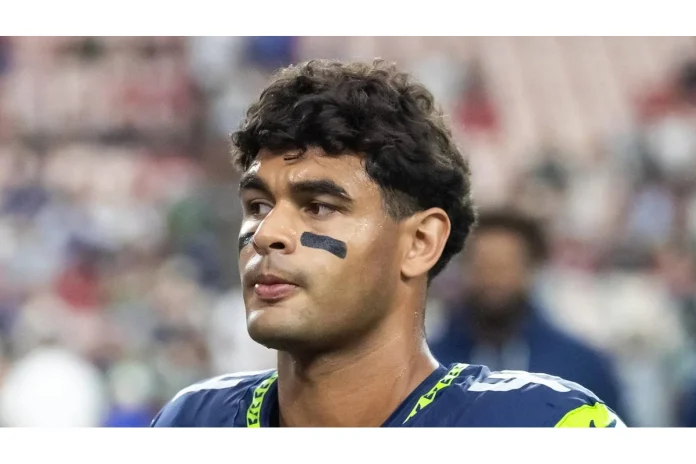
Rodney Dejuane Thomas Bio
Rodney Dejuane Thomas was an American professional football player who served as a running back for seven seasons in the National Football League. Born on March 30, 1973, in Trinity, Texas, Thomas played college football for the Texas A&M Aggies before being selected by the Houston Oilers in the third round of the 1995 NFL Draft. Over his professional career, Thomas played for both the Houston Oilers and Tennessee Titans franchise, as well as the Atlanta Falcons. He was known for his exceptional work ethic, character, and ability to thrive in supporting roles throughout his career. Thomas passed away on June 14, 2014, from a heart attack at the age of 41 in Groveton, Texas.
Early Life and Background
Thomas was born in Trinity, Texas, on March 30, 1973, and grew up in the small town of Groveton. He attended Groveton High School, where he began to establish himself as an extraordinary running back. During his high school career, Thomas led the Groveton Indians to two Class 2A state titles while accumulating 8,441 rushing yards, which ranked as the third-best total in national high school history at the time and remains the third-best in Texas state history. He scored 115 touchdowns during his tenure and as a senior in 1990, Thomas rushed for an impressive 3,701 yards, the second-highest single-season total in Texas high school history. Notably, he became the first Texas running back to rush for 100 yards in all 16 games possible during a high school season.
Path to American Football
Following his stellar high school performance, Thomas received significant recruiting interest from multiple college programs. He ultimately chose to continue his football career at Texas A&M University, where he immediately made an impact. As a freshman with the Aggies, Thomas rushed for nearly 300 yards and only improved over the following three seasons, posting consistent totals of 856, 996, and 868 yards respectively. He became only the fourth player in Texas A&M history to rush for more than 3,000 career yards and finished as the school’s fourth all-time leading rusher while ranking second in career rushing touchdowns.
Thomas was a two-time, consensus All-Southwest Conference selection in 1993 and 1994. His 45 career touchdowns tied him with Darren Lewis for the most in Texas A&M history at that time. During his collegiate career, the Aggies led the Southwest Conference in rushing for four consecutive seasons as Thomas formed a formidable backfield combination with future NFL players Greg Hill and Leeland McElroy. His teams also set school records for most points scored in a season twice and never lost a game at Kyle Field, going 28-0-1 against conference opponents during that span. Thomas was recognized with the Southwest Conference American Airlines Spirit Award and was honored as the 1994 recipient of the Aggie Heart Award, the highest honor for a senior football player at Texas A&M.
Rodney Dejuane Thomas Career
Houston Oilers (1995–2000)
Thomas was selected by the Houston Oilers in the third round with the 89th overall pick in the 1995 NFL Draft. He made an immediate impact during his rookie season, finishing with 1,151 combined yards from scrimmage, including 947 rushing yards and 204 receiving yards. His rookie rushing total was the second-highest in Oilers history behind Hall of Famer Earl Campbell. Thomas was one of only 19 players in the AFC that season to surpass 1,000 combined yards. His strong debut positioned him as a promising young talent in the league.
Despite his impressive rookie campaign, Thomas transitioned to a backup role beginning in 1996 when the Oilers selected 1995 Heisman Trophy winner Eddie George with their first-round draft pick. His carries diminished significantly over the following seasons, with just 49 rushing yards in 1996, 310 yards in 1997, and only 100 yards in 1998 as George emerged as the franchise’s featured back. Thomas accepted his reduced role with professionalism and remained a valued team player, declining more lucrative offers from other teams that would have given him more playing opportunities. He continued with the organization through their relocation from Houston to Tennessee, where he served as a backup and mentor to younger players while providing leadership both on and off the field.
Tennessee Titans (1999–2000)
Thomas remained with the franchise through the transition to Tennessee and was part of the team that reached Super Bowl XXXIV following the 1999 season. The Titans faced the Kurt Warner-led St. Louis Rams in that championship game but fell short in a closely contested matchup. Thomas appeared in the Super Bowl as a substitute, representing the culmination of his patient journey through the Oilers organization. He continued with the Titans through the 2000 season before moving on to pursue a new opportunity.
Atlanta Falcons (2001)
Prior to the 2001 season, Thomas signed as a free agent with the Atlanta Falcons. He appeared in 12 games for the Falcons that year, carrying the ball 37 times for 126 yards and catching two passes for 26 yards. This season marked his final year of professional football, as he was waived by the Falcons before the 2002 preseason and subsequently retired from the NFL after seven seasons.
Playing Style and Strengths
Thomas was known for his reliability and consistency as a running back. His ability to contribute both as a rusher and receiver made him a versatile option in offensive schemes. Despite never serving as a primary ball carrier for extended stretches in the NFL, he demonstrated the capacity to make an impact in limited opportunities. His exceptional work ethic and character set him apart, enabling him to maintain a professional attitude throughout his career regardless of his role on the team.
Career Statistics
Over seven NFL seasons, Thomas appeared in 103 games and rush 532 times for 1,973 yards and 12 touchdowns. He also recorded 91 receptions for 631 receiving yards and 3 receiving touchdowns, demonstrating his value as a dual-threat back throughout his professional career.
Rodney Dejuane Thomas Career Statistics
Thomas compiled solid professional statistics across seven NFL seasons, contributing significantly as both a rusher and receiver despite frequently serving in backup roles. His versatility allowed him to make an impact in various offensive situations throughout his career.
NFL Career Highlights
His most productive professional season came as a rookie with the Houston Oilers in 1995, when he accumulated 1,151 total yards from scrimmage. His career totals include 1,973 rushing yards on 532 attempts with 12 touchdowns on the ground, along with 91 receptions for 631 yards and 3 receiving touchdowns. Thomas appeared in 103 career games and notably participated in Super Bowl XXXIV with the Tennessee Titans during the 1999 season.
Rodney Dejuane Thomas Family
Family Background
Thomas was born in Trinity, Texas, and grew up in the Groveton community. He was related to former NFL safety Terrence Kiel, who also enjoyed a professional football career. Thomas came from relatively modest means but was known for his strong moral character from an early age. At Texas A&M, he became well known among fellow students for an incident in Cain Hall, the athletic dormitory, where he took it upon himself to reimburse a malfunctioning soft drink machine for all the drinks that had been dispensed without payment, demonstrating his integrity even when no one was watching.
Personal Life
Thomas was married to his wife Leigh. Together they had one son, Ian Rodney Thomas. At the time of his death, his son was four years old. Thomas also had a teenage stepson named Jalen David Brown. His family resided in Texas, and Thomas maintained close ties to his home state throughout his life and football career.
Legacy and Honors
Rodney Dejuane Thomas left a lasting legacy both on and off the football field. At the collegiate level, he was inducted into the Texas A&M Hall of Fame and remains remembered as one of the most accomplished running backs in school history. His character and leadership were recognized repeatedly during his career, including his receipt of the Aggie Heart Award and the Southwest Conference American Airlines Spirit Award. Thomas was posthumously remembered as a player who exemplified perseverance, humility, and unwavering commitment to his teams despite personal sacrifice in accepting reduced roles. His passing in 2014 at age 41 from a heart attack was mourned by the football community, particularly within the Texas A&M family and among his former teammates and coaches.